Monday, 15 February 2010

2010 Novitec Rosso Ferrari California Official Revealed

2010 Novitec Rosso Ferrari California

Sporty styling, a custom-tailored tire/wheel combination with diameters of 21 and 22 inches, suspension modifications, more power and exclusive interior options: NOVITEC ROSSO now also refines the new Ferrari California.

Tasteful refinements with aerodynamic benefits characterize the NOVITEC ROSSO design program for the sports car from Maranello. All aerodynamic-enhancement components are made from especially lightweight yet high-strength clear-coated carbon fiber.

The NOVITEC ROSSO front spoiler attaches to the production bumper and lends the sports car an even more striking face. Its sophisticated shape further reduces lift on the front axle for even better directional stability at high speeds.

The sides are upgraded with striking NOVITEC ROSSO rocker panel moldings for an even more clearly defined racing look. Black side markers add further individual highlights.

To reduce lift on the rear axle and thus achieve an optimal aerodynamic balance NOVITEC ROSSO equips the California with a newly designed diffuser for the rear apron and a spoiler lip on the trunk lid.

Three-piece NOVITEC ROSSO NF3 wheels also play a major role in the even more stunning appearance of the refined Ferrari. By choosing a staggered combination of size 9Jx21 wheels in front and size 11.5Jx22 on the rear axle NOVITEC ROSSO further emphasizes the wedge shape of the car. Technology partner Pirelli supplies high-performance tires custom-tailored to this Ferrari. The front axle features tires in size 255/30 ZR 21. In the rear tires in size 315/25 ZR 22 provide optimal traction.

NOVITEC ROSSO sport springs are custom-calibrated to match these ultra-low-profile tires, and lower the ride height by some 35 millimeters. At the same time the NOVITEC ROSSO specialists have developed an additional feature to further improve the everyday utility of the Ferrari California. The NOVITEC ROSSO hydraulic front lift system raises the front of the car by some 40 millimeters at the push of a button in the interior. That allows drivers to safely navigate parking garage ramps or speed bumps. At a second push of the button or automatically when reaching a speed of 80 km/h the front reverts to its original position.

Even faster throttle response and more power characterize the first NOVITEC ROSSO tuning stage for the Ferrari California, which increases power output of the 4.3-liter V8 engine by 40 hp / 29.4 kW to 500 hp / 368 kW. Simultaneously peak torque grows from 485 to 518 Nm at 5,300 rpm.

This injection of extra power comprises on the one hand a newly calibrated engine management system with custom mapping for injection and ignition, including a new higher redline speed of 8,300 rpm. The tuning package also includes the NOVITEC ROSSO stainless-steel high-performance exhaust system with metal catalysts and a flap actuator operated from the Manettino switch on the steering wheel.

NOVITEC ROSSO fulfills customer demands for interior customization with perfectly finished leather and Alcantara interiors. The choice of available colors and meticulously sewn upholstery designs is virtually unlimited.

2010 Novitec Rosso Ferrari California


maserati car review

maserati car
maserati
2010 maserati
maserati car

maserati 2008
maserati

Sunday, 14 February 2010

2009 Hyundai H1 photo gallery

2009 Hyundai H1Hyundai H1 20092009 Hyundai H12009 Hyundai H12009 Hyundai H12009 Hyundai H12009 Hyundai H12009 Hyundai H12009 Hyundai H12009 Hyundai H12009 Hyundai H12009 Hyundai H12009 Hyundai H12009 Hyundai H1Hyundai H 1 (2008)2009 Hyundai H12009 Hyundai H12009 Hyundai H12009 Hyundai H 12009 Hyundai H12009 Hyundai H1

Saturday, 13 February 2010

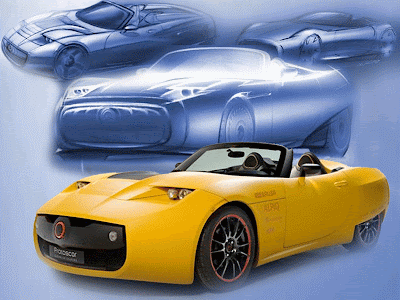
2010 LAMPO2 Electric Sports Car Protoscar Concept

LAMPO2 is an electric demonstration sports car conceived by Protoscar, a Swiss company which has been developing CleanCar projects for 23 years including consulting of OEMs, power utilities and governments. The LAMPO2 boasts 'quick-charging' capability (up to 100 km range extension in just 10 minutes charging time) and will be presented at the Geneva Motor Show (2nd March 2010) on the e'mobile stand Nr. 5141.
2010 LAMPO2 Electric Sports Car Protoscar Concept
LAMPO2 is an even more energy efficient successor to the LAMPO demonstration vehicle presented in 2009. Weight, aerodynamics and the efficiency of individual components of the BRUSA drive train have been further optimized in order to reach a world-class energy consumption of less than 100Wh/km-ton under real conditions. LAMPO2 is equipped with 4 different charging modes:
• standard single-phase with up to 3,3kW on board charger for typical overnight home-charge,
• 'control-pilot' equipped and (EDF provided) PLC single-phase with 6,6kW on board charger typical for public charging,
2010 LAMPO2 Electric Sports Car Protoscar Concept 
• standard three-phase 9,9kW on board charger typical for charging at industrial plugs (fleet-owners) and
• an interface for DC fast charging (able to transmit a max. power of 80kW), where up to 100km of additional range can be charged within just 10 minutes, by an off-board system, so that the different solutions can be compared in terms of usability and efficiency by being demonstrated in real conditions.
2010 LAMPO2 Electric Sports Car Protoscar Concept 
LAMPO2 will be shown together with different charging infrastructure solutions: a smart home charge device (developed with ALPIQ), the public charging station E-TOTEM and the quick-charging station (developed with ABB and Brusa).
2010 LAMPO2 Electric Sports Car Protoscar Concept 
LAMPO2 impressively demonstrates that electric drive-trains are mature and perform sufficiently well to be a solution for all types of vehicles, not just city cars. This includes premium cars, the segment through which most new technologies have successfully been introduced into the market.
2010 LAMPO2 Electric Sports Car Protoscar Concept 
Together with the first LAMPO (which has already been driven over 10'000 km on race tracks and public roads across Europe), LAMPO2 will be used for practical demonstrations and testing. Protoscar has repeatedly been encouraged to develop an advanced electric cabriolet for small-scale production and plans to use the LAMPO2 to evaluate this possibility. The evaluation will include discussions with potential industrial and financial partners, and an assessment of the preferences and desires of potential clients. Lampo crossing the Gotthard pass in May 2009.
2010 LAMPO2 Electric Sports Car Protoscar Concept 
In addition to BRUSA, which supplies the components of the whole drive train, the main partners and sponsors of the LAMPO2 project are ALPIQ (the leading Swiss company in power generation and distribution, which is actively promoting the goal of 15% of electric vehicles in Switzerland by 2020), the German Fraunhofer Institute IAO (EV-specific features and MMI, as well as optimization of the ergonomics), ABB (DC fast-charging technology) and the Swiss Federal Office of Energy.
2010 LAMPO2 Electric Sports Car Protoscar Concept 
Technical details LAMPO2 has two electric motors (allowing it to operate as a four-wheel drive with variable torque between front and rear axle for optimal handling, safety and efficiency) with a total output of 260 kW (equivalent to 350 HP), 600 Nm (50% more than its predecessor!) and over 30 kWh of Lithium-Ion battery capacity. LAMPO2 features real sports-car performances: 5 seconds to accelerate from 0 to 100 km/h, 200 km/h of max. speed and a range of over 200 km. More than enough energy for driving is produced by a remote solar plant which is installed on the roof of a farm in Tuscany, allowing a real zero-emission drive on a 'Well-to-Wheel' basis.

Source - Protoscar

2010 LAMPO2 Electric Sports Car Protoscar Concept

LAMPO2 is an electric demonstration sports car conceived by Protoscar, a Swiss company which has been developing CleanCar projects for 23 years including consulting of OEMs, power utilities and governments. The LAMPO2 boasts 'quick-charging' capability (up to 100 km range extension in just 10 minutes charging time) and will be presented at the Geneva Motor Show (2nd March 2010) on the e'mobile stand Nr. 5141.
2010 LAMPO2 Electric Sports Car Protoscar Concept
LAMPO2 is an even more energy efficient successor to the LAMPO demonstration vehicle presented in 2009. Weight, aerodynamics and the efficiency of individual components of the BRUSA drive train have been further optimized in order to reach a world-class energy consumption of less than 100Wh/km-ton under real conditions. LAMPO2 is equipped with 4 different charging modes:
• standard single-phase with up to 3,3kW on board charger for typical overnight home-charge,
• 'control-pilot' equipped and (EDF provided) PLC single-phase with 6,6kW on board charger typical for public charging,
2010 LAMPO2 Electric Sports Car Protoscar Concept 
• standard three-phase 9,9kW on board charger typical for charging at industrial plugs (fleet-owners) and
• an interface for DC fast charging (able to transmit a max. power of 80kW), where up to 100km of additional range can be charged within just 10 minutes, by an off-board system, so that the different solutions can be compared in terms of usability and efficiency by being demonstrated in real conditions.
2010 LAMPO2 Electric Sports Car Protoscar Concept 
LAMPO2 will be shown together with different charging infrastructure solutions: a smart home charge device (developed with ALPIQ), the public charging station E-TOTEM and the quick-charging station (developed with ABB and Brusa).
2010 LAMPO2 Electric Sports Car Protoscar Concept 
LAMPO2 impressively demonstrates that electric drive-trains are mature and perform sufficiently well to be a solution for all types of vehicles, not just city cars. This includes premium cars, the segment through which most new technologies have successfully been introduced into the market.
2010 LAMPO2 Electric Sports Car Protoscar Concept 
Together with the first LAMPO (which has already been driven over 10'000 km on race tracks and public roads across Europe), LAMPO2 will be used for practical demonstrations and testing. Protoscar has repeatedly been encouraged to develop an advanced electric cabriolet for small-scale production and plans to use the LAMPO2 to evaluate this possibility. The evaluation will include discussions with potential industrial and financial partners, and an assessment of the preferences and desires of potential clients. Lampo crossing the Gotthard pass in May 2009.
2010 LAMPO2 Electric Sports Car Protoscar Concept 
In addition to BRUSA, which supplies the components of the whole drive train, the main partners and sponsors of the LAMPO2 project are ALPIQ (the leading Swiss company in power generation and distribution, which is actively promoting the goal of 15% of electric vehicles in Switzerland by 2020), the German Fraunhofer Institute IAO (EV-specific features and MMI, as well as optimization of the ergonomics), ABB (DC fast-charging technology) and the Swiss Federal Office of Energy.
2010 LAMPO2 Electric Sports Car Protoscar Concept 
Technical details LAMPO2 has two electric motors (allowing it to operate as a four-wheel drive with variable torque between front and rear axle for optimal handling, safety and efficiency) with a total output of 260 kW (equivalent to 350 HP), 600 Nm (50% more than its predecessor!) and over 30 kWh of Lithium-Ion battery capacity. LAMPO2 features real sports-car performances: 5 seconds to accelerate from 0 to 100 km/h, 200 km/h of max. speed and a range of over 200 km. More than enough energy for driving is produced by a remote solar plant which is installed on the roof of a farm in Tuscany, allowing a real zero-emission drive on a 'Well-to-Wheel' basis.

Source - Protoscar

Thursday, 11 February 2010

Maserati Electric Supercar Tramontane Concept

Maserati Electric Supercar Tramontane Concept

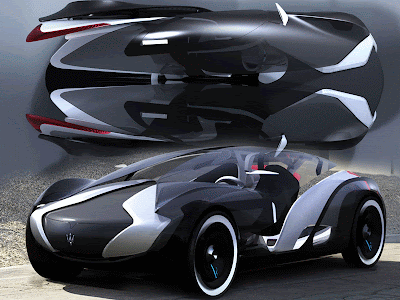
The Maserati Tramontane Concept is a luxury electric supercar with a futuristic design characterized by flowing elements that form different layers and interconnect the exterior and the interior. The author is Czech design student Ondrej Jirec.
The Maserati Tramontane is a lightweight electric luxury supercar with an original design focused on the reduction of the total number of body parts and the simplification of the production process by combining exterior and interior elements.
Maserati Electric Supercar Tramontane Concept 

Aside from the slippery, aerodynamic overall shape, the most eye-catching aspect of the concept's design is the number of components and body panels which flow from the interior to the exterior. These body parts have different functions, color, material and characteristics which are designed to add different dimensions and effect the overall feel of the vehicle.
Maserati Electric Supercar Tramontane Concept 

It was created by Czech student Ondrej Jirec for his Alias class at the Art Center College of Design. Among the distinctive features of the Maserati Tramontane's design are the components and body panels which flow from the interior to the exterior. These parts have different function, color, material and characteristics and create layers that add different "dimensions" and define an original design language.
The first layer is the main glass exterior surface that essentially envelops the entire car. It is supported by a black frame which attaches to the chassis.
Maserati Electric Supercar Tramontane Concept 

The second layer is composed of the headlamps and the dashboard. This single piece carries the LED headlights and flows smoothly back into the interior where it protects the speakers and interior air vents.
The third layer of the Tramontane creates the lower sections of the seats and, as it reaches the exterior, also carries the taillights. This particular part possesses very high resistance to impact. In case of side impact the seat and chassis work together to protect the occupants. But in the event of a rear collision, this part contains a crumple zone that will collapse, so the seats remain protected.
Maserati Electric Supercar Tramontane Concept 

The fourth layer, placed in the front, serves as a housing for the electric motor and also as a dashboard. This element is attached to the chassis and hides the motor, frame, and all the electronics.
Having its length at 4,250mm, Tramontane is just 50mm shorter in length to Lamborghini Gallardo. Its height is 1,170mm which is almost the same as that of Gallardo’s. Its front wheels are driven by an electric motor, whereas the rear ones have an electric motor for each.
Maserati Electric Supercar Tramontane Concept 

The most striking facet of its design is the number of components and body panels that smoothly move from interior to the exterior. Its parts have different functions, color, material and characteristics that aid more to the overall feel of the vehicle.
The proposed drivetrain for the concept is an all-electric setup. The front wheels are driven by one electric motor, while the rear wheels each get their own motor.

Maserati Electric Supercar Tramontane Concept

Maserati Electric Supercar Tramontane Concept

The Maserati Tramontane Concept is a luxury electric supercar with a futuristic design characterized by flowing elements that form different layers and interconnect the exterior and the interior. The author is Czech design student Ondrej Jirec.
The Maserati Tramontane is a lightweight electric luxury supercar with an original design focused on the reduction of the total number of body parts and the simplification of the production process by combining exterior and interior elements.
Maserati Electric Supercar Tramontane Concept 

Aside from the slippery, aerodynamic overall shape, the most eye-catching aspect of the concept's design is the number of components and body panels which flow from the interior to the exterior. These body parts have different functions, color, material and characteristics which are designed to add different dimensions and effect the overall feel of the vehicle.
Maserati Electric Supercar Tramontane Concept 

It was created by Czech student Ondrej Jirec for his Alias class at the Art Center College of Design. Among the distinctive features of the Maserati Tramontane's design are the components and body panels which flow from the interior to the exterior. These parts have different function, color, material and characteristics and create layers that add different "dimensions" and define an original design language.
The first layer is the main glass exterior surface that essentially envelops the entire car. It is supported by a black frame which attaches to the chassis.
Maserati Electric Supercar Tramontane Concept 

The second layer is composed of the headlamps and the dashboard. This single piece carries the LED headlights and flows smoothly back into the interior where it protects the speakers and interior air vents.
The third layer of the Tramontane creates the lower sections of the seats and, as it reaches the exterior, also carries the taillights. This particular part possesses very high resistance to impact. In case of side impact the seat and chassis work together to protect the occupants. But in the event of a rear collision, this part contains a crumple zone that will collapse, so the seats remain protected.
Maserati Electric Supercar Tramontane Concept 

The fourth layer, placed in the front, serves as a housing for the electric motor and also as a dashboard. This element is attached to the chassis and hides the motor, frame, and all the electronics.
Having its length at 4,250mm, Tramontane is just 50mm shorter in length to Lamborghini Gallardo. Its height is 1,170mm which is almost the same as that of Gallardo’s. Its front wheels are driven by an electric motor, whereas the rear ones have an electric motor for each.
Maserati Electric Supercar Tramontane Concept 

The most striking facet of its design is the number of components and body panels that smoothly move from interior to the exterior. Its parts have different functions, color, material and characteristics that aid more to the overall feel of the vehicle.
The proposed drivetrain for the concept is an all-electric setup. The front wheels are driven by one electric motor, while the rear wheels each get their own motor.