skip to main |skip to sidebar


 Overview:
Presents for first debut at IAA 2009, Audi e-tron Concept sport car has the electric drive system and high-performance. Audi e-tron Concept use the 4 motor which 2 of it at the front axles. Audi e-tron Concept just need 4.8 seconds from 0 to 100 km/h (0-62.14 mph) and 60 to120 km/h just need 4.1 seconds. Audi e-tron Concept is more powerful with 4 electric motors. Audi presents the highlight of the IAA 2009: the Audi e-tron Concept, a high-performance sports car with a purely electric drive system. Four motors – two each at the front and rear axles – drive the wheels, making the concept car a true quattro. Producing 230 kW (313 hp) and 4,500 Nm (3,319.03 lb-ft) of torque, the two-seater accelerates from 0 to 100 km/h (0 – 62.14 mph) in 4.8 seconds, and from 60 to 120 km/h (37.28 – 74.56 mph) in 4.1 seconds. The lithium-ion battery provides a truly useable energy content of 42.4 kilowatt hours to enable a range of approximately 248 kilometers. The performance figures are by no means the only evidence of the consistent and holistic strategy. The design makes it clear that the Audi e-tron Concept belongs in the major leagues of sports cars, and the package takes into account the specific realities of an electric vehicle. The battery is directly behind the passenger cabin for an optimal center of gravity and axle load distribution. The Audi e-tron Concept is able to freely distribute the powerful torque of its four electric motors to the wheels as required. This so-called torque vectoring allows for dazzling dynamics and an undreamed-of level of agility and precision when cornering. The caliber of the car is apparent to the observer at first glance. The Audi e-tron Concept has a wide, powerful stance on the road. The car body seems almost monolithic; the closed rear end appears powerful and muscular. The trapeze of the single-frame grille dominates the front end and is flanked by two large air intakes. The top of the grille merges into the flat strips of the adaptive matrix beam headlamp modules with their clear glass covers. High-efficiency LED technology is used for all lighting units – a matter of honor for Audi as the worldwide pioneer in this field. The headlamps are the core of a fully automatic light assistance system that reacts flexibly to any situation. The new technology recognizes weather conditions and adapts the illumination to rain or fog. The technology at the heart of the light assistance system is a camera that works together with a fast computer to detect oncoming traffic, recognize lanes and measure visibilities, such as in the event of fog. If there is oncoming traffic, for example, the high beams are turned off in the corresponding section of the illumination field. The cornering light system analyzes data from the navigation system and illuminates corners before the driver steers into them. The Audi e-tron Concept does not have conventional fog lamps that consume additional power. It instead intelligently varies the low beams to widen the illumination field, thus significantly reducing the glare from the car’s own lights. The normal distribution of the tractive power is clearly biased toward the rear axle in accordance with the weight distribution of the Audi e-tron Concept. Similarly to a mid-engined sports car, roughly 70 percent of the power goes the rear and 30 percent to the front. If an axle slips, this balance can be varied by means of the four centrally controlled electric motors. The electric vehicle from Audi thus enjoys all of the advantages of quattro technology. The four individual motors, which in the interest of greater traction are installed behind the wheels as wheel drives, also enable the Audi e-tron Concept’s lateral dynamics to be intelligently controlled. Similar to what the sport differential does in conventional quattro vehicles, torque vectoring – the targeted acceleration of individual wheels – makes the Audi e-tron Concept even more dynamic while simultaneously enhancing driving safety. Understeer and oversteer can be corrected by not only targeted activation of the brakes, but also by precise increases in power lasting just a few milliseconds. The concept car remains extremely neutral even under great lateral acceleration and hustles through corners as if on the proverbial rails. The chassis has triangular double wishbones at the front axle and trapezoidal wishbones made of forged aluminum components at the rear axle – a geometry that has proven in motorsports to be the optimal prerequisite for high agility, uncompromising precision and precisely defined self-steering behavior. A taut setup was chosen for the springs and shock absorbers, but it is still very comfortable. The direct rack-and-pinion steering gives finely differentiated feedback. Its electromechanical steering boost varies with speed, so that the Audi e-tron Concept only has to provide energy while steering, and not while driving straight ahead. As befitting its status, the Audi concept car rolls on 19-inch tires with a new blade design. 235/35 tires up front and 295/30 tires in the rear provide the necessary grip.
Performance/Specifications:
General - Country Of Origin: Germany.
- Numbers Built: N/A (Prototype)
- Produced In: 2009
- Introduced At: 2009 Frankfurt Motor Show.
Engine - Configuration: Four Electric Motors.
- position: Frond And Rear Electric Axles.
Drivetrain Performance - Transmission: 2 single-speed reduction gearboxes.
- Horsepower: 313 bhp / 233 KW.
- Torque: 4500 Nm / 3319 ft lbs.
- Top Speed: 200 km/h / 124 mph.
- 0-60 mph: 4.7 s.


 Overview:
The LRX is described as a cross-coupé, and dramatically extends the scope of what Land Rover stands for. Though smaller than the LR2, the LRX is conceived as a premium car, designed to appeal to new customers in the luxury and executive sector – those who want many of the benefits of a 4x4 and the visual presence of a larger vehicle, but in a more compact package. The first all-new Land Rover revealed since Gerry McGovern became the company's design director, LRX is a natural extension of the Land Rover range, complementing the existing models with a car that will help to define a new segment. Its many recognizable Land Rover design cues include bold new interpretations of the signature clamshell hood, the floating roof and the solid ‘wheel-at-each-corner’ stance. "LRX is a design born out of passion for the brand, but it is different, relevant, engaging and exciting – because Land Rover has never built ordinary cars," says Gerry McGovern. "LRX has a highly desirable identity and the design alludes strongly to its capability, while clearly underlining our forward-looking philosophy – it's a Land Rover that would be comfortable on Bond Street or Fifth Avenue, but wouldn’t flinch at getting its wheels dirty." Its compact size is one of its greatest assets, which will appeal to anyone who wants the versatile ability of an agile SUV with the cachet of the Land Rover name. In addition, its lower weight and the reduced aerodynamic drag resulting from the smaller frontal area give significant gains in fuel efficiency and reduced C02 emissions. The LRX concept also adopts intelligent power management systems and other technologies first shown by Land Rover in the Land_e concept in 2006. Further details of the LRX's powertrain and sustainability technologies will be released at the Detroit Auto Show. The interior of the LRX concept clearly demonstrates how a compact Land Rover can still be roomy, practical and versatile – and one with great sophistication. The impeccably executed cabin features a combination of soft leathers in rich tan and dark chocolate, with polished aluminum details. The ‘fast’ sloping architecture of the center console reflects the LRX’s sporty dynamics, as does the distinctive binnacle over the instrument panel. The electronic display uses "floating" LCD graphics to create a three-dimensional look that can be personalized for different drivers, as well as interacting with the LRX's touch-screen display. The instrument graphics present data in layers depending on their level of importance, to give maximum relevant information with minimum distraction. When appropriate, displayed information transfers between the main instrument cluster and the touch screen. And further adding to the LRX’s involving personality, the different drivetrain modes are matched by changes in the cabin’s background lighting color – green in economy, red in sports and blue in standard mode. The structures of the seats and instrument panel are elegant enough to be left exposed – one novel approach that Land Rover's designers have taken to reduce vehicle weight. Another example is replacing the glass for side windows and roof with polycarbonate, which is around 40 percent lighter. Even the choice of the premium quality trim materials reflects Land Rover's deep thinking about sustainability, with vegetable-tanned leather (chromium-free, so better for recycling), extensive use of aluminum (both lightweight and readily recyclable), and carpeting made of felt from sustainable sources. And the luxurious vanilla-colored "fine suede" on the door inserts and headliner is a 100 percent recycled material made from used plastic bottles. "We are determined to make sustainability a key element in our future product design and the way we do business, while still creating vehicles that have a strong emotional appeal as well as fulfill people's practical needs," says Phil Popham. "No one technology delivers all the answers to whole life sustainability, but the LRX concept brings together some of the future ideas that interest us, into a car that we believe represents an exciting way forward for Land Rover."Performance/Specifications:
General - Engine Location: Front.
- Drive Type: 4WD.
- Introduced At: 2008 North American International Auto Show.
Engine - CO2 emissions (potential): 120 g/km.
- Engine Configuration: I
- Cylinders: 4
- Aspiration/Induction: Turbocharged.
- Displacement: 2.00 L / 122 cu in. / 1999.6 cc.
- Fuel Type: Diesel.
Dimensions - Doors: 2
- Length: 4351.001 mm / 171.3 in.
- Width: 1895.001 mm / 74.6 in.
- Height: 1535.001 mm / 60.4 in.




 Overview:
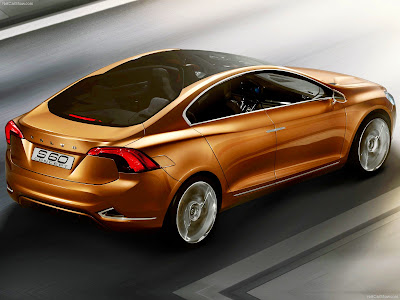
The Volvo S60 Concept car which will be unveiled at the Detroit Motor Show in early January 2009, will give an indication of what the all-new Volvo S60 will look like when it's launched in 2010. "The all-new S60 will be one of the strongest players in a segment where the competition is razor-sharp," says Volvo Cars President and CEO Stephen Odell. The coupe-inspired lines that gave the original Volvo S60 its characteristic stance are more pronounced in this next generation. "The sporty design gives a visual promise of an enthusiastic drive and I can assure you that the all-new S60 will live up to that promise. The driving properties are better than in any previous Volvo," says Stephen Odell. "The concept car's exterior gives a clear indication of what customers can expect of the all-new Volvo S60. On the inside we've been even more daring," says Volvo Cars Design Director Steve Mattin. The front of the Volvo S60 Concept sports the enlarged iron mark in the trapezoidal grille. The two lamps that flank the grill emphasise the vertical stance of the front and highlight the bonnet's V-shape. The angled headlamps flow up into the strongly sculptured bonnet and combined with the lower air intake's reverse trapezoidal shape, this gives the concept car a very expressive "face". "Dynamic and with considerable character, but without appearing aggressive. This car is packed with inspiration from Scandinavian design and from the Swedish coastline's cliffs and seas. A thrilling blend of drama and sensuality," says Steve Mattin. Viewed from the side, the concept car's slim coupe roofline and window graphics are accompanied by an entirely new shoulder line, forming a gentle double wave, stretching from the headlamps all the way to the rear. Both the seven-spoke 20-inch wheels and the tread of the low-profile tyres have been specially designed, while the bronze-painted brake callipers match the "Warm Liquid Copper" livery. The unique rear parallelogram doors offer a spectacular show when they are opened and closed. Door opening is initiated by pressing a button and the movement starts off in the traditional way. In the next phase, the forward section swings out away from the car's body and the door glides parallel with the side of the car until it reaches its end position by the rear wheel. Since the car does not have a B-pillar between the front and rear seats, this door configuration offers exceptionally generous entry and exit access. The transparent attachment of the door mirrors illuminates and becomes part of the indicator function. The panorama roof is another ingredient that contributes to the concept car's airy Scandinavian aura. "The unique livery in "Warm Liquid Copper" enhances the richness of the Volvo S60 Concept's body surfacing, adding a feeling of depth and exclusivity. The colour also links to Sweden's rich copper mining history," says Steve Mattin. In each of the headlamps, the lights create a silhouette of two miniature Viking longboats sailing side by side, one for main beam and one for dipped beam. When driving in the dark, the light is reflected from the concealed, upward-facing High Performance LED bulbs, projected ahead by the ships' filled sails. A closer look reveals more detail. The compact cooling system for the LED bulbs has protruding cooling blocks made out of aluminum, semi-visible under the ships' hulls. This design creates the illusion of shimmering glass panels that float above a dark and mysterious Scandinavian sea. "In forthcoming models, you will see more and more of our "racetrack" design cues. The car's lines do not end abruptly but instead forge a continuous flow pattern inspired by the fast sweeps of the racing track. In the concept car, this is particularly visible at the rear," says Steve Mattin. The tail lamps, which follow the curve of the rear shoulders, are as advanced as the headlamps. When switched off, the lamp panels show no trace of the traditional red or yellow. But when activated, the position marker lights, brake lights and turn indicators come on in their correct colours with the help of LED bulbs. The solid glass panel is sectioned into horizontal "slices" that create the visual impression of a three-dimensional architect drawing when the lights come on. At the rear there is also a retractable diffuser that adjusts with vehicle speed to give better aerodynamic properties. The Volvo S60 Concept also presents a safety innovation that can detect a pedestrian who steps out into the path of the car and the car's full braking power is automatically activated if the driver does not respond to the danger. The technology, Collision Warning with Full Auto Brake and pedestrian detection, will be introduced in the all-new Volvo S60. "We're going to be even more exciting and dynamic while retaining our lead in the field of safety. The all-new S60 will be packed to the brim with all our expertise and technology in the safety area, both as regards preventing accidents and when it comes to protecting all the occupants in the event of a collision," says Stephen Odell. The Volvo S60 Concept was created to pave the way for Volvo Cars in one of the automotive world's most focused segments, characterised by razor-sharp competition. "Customers in this segment know exactly what they want. The emphasis is on emotional appeal, sporty design and dynamic driving properties. Success in the segment will do a lot for the brand's image and we are convinced that the all-new Volvo S60 is going to be a particularly strong contender," says Stephen Odell. The first-generation Volvo S60 was launched in 2000 and was profiled as a coupe with four doors. "Irrespective of whether the customers are in the USA, Europe or Russia, they all prioritise the same things. Now we are giving them an entirely new S60 packed with both emotional and rational appeal. A car designed to make a unique impact even among the most discerning buyers," says Stephen Odell.Performance/Specifications:General - Country Of Origin: N.A
- Year Of Introduction: 2009
- Base Price When New: N.A
- Miles Per Gallon: N.A
- Body Type: N.A
- Curb Weight: N.A
- Powertrain Layout: N.A
- Transmission: N.A
Engine - Configuration: 1.6 liter inline-4
- Displacement: N.A
- Power: 180 HP
- Torque: N.A
- BHP / Liter: 112.5 hp per liter.
- BHP / Weight: N.A
- Redline: N.A
Performance - Top Speed: N.A
- 0 - 62 mph: N.A
- 0 - 100 mph: N.A
- 0 - 250 mile: N.A
- Skidpad: N.A
- Braking, 62-0 mph: N.A
- Slalom Speed: N.A


 Overview:In the lofty ultra-luxury coupe segment, our usual vehicle evaluation logic doesn't really apply. The 2009 Bentley Continental GT is a case in point. It costs about $25,000 more than the similarly conceived Mercedes CL600, for example, which outperforms it in just about every measurable way -- yet the Continental GT is a popular choice among business executives, professional athletes and Hollywood stars who want to make a powerful automotive statement. Rather than crunching performance and pricing numbers, most buyers of the Continental GT will be more concerned about prestige, presence and whether they'll see other cars like their own during the daily commute. Rather than comparing feature content, they're more likely to figure out if they can create their own exterior paint color. For folks willing to plunk down 200 grand for a coupe, they want attitude, exclusivity and exquisite quality -- the Continental GT has it all in spades. Let's start with the Bentley's dramatic exterior shape, which makes the Benz look even more like a frumpy Solara than usual. Check out the quad circular headlamps, fastback profile and imposing 19-inch wheels -- now that's attitude. The Continental GT continues to impress inside, where rich cowhide, gleaming wood and classic analog instrumentation combine to create a perfectly opulent environment. Under the hood, the all-wheel-drive Bentley receives a twin-turbocharged W12 power plant courtesy of parent company Volkswagen. It's a distinctive-sounding engine that generates gargantuan low-end torque. As for exclusivity, well, Southern California, home of Edmunds' headquarters, is home to a dizzying array of ultra-expensive cars, and even we don't see too many Continental GTs tooling around. Of course, our logical brains are unmoved by such considerations, so the Continental GT doesn't make a lot of sense in our book. The far cheaper Maserati Gran Turismo is more engaging to drive and arguably more stylish. The aforementioned Mercedes is quicker and more nimble, and it also costs less. The BMW M6 will keep pace with the Bentley for barely half the price. The seductively sleek Aston Martin DB9 is competitive on all fronts. But for many well-heeled coupe shoppers, the 2009 Bentley Continental GT's regal bearing and scarcity on the street will trump more practical considerations. Logic aside, the Continental GT clearly has that "je ne sais quoi" that appeals to those with the means to buy one. The 2009 Bentley Continental GT is a premium luxury coupe available in one loaded trim level. Standard equipment includes 19-inch wheels, an electronically adjustable air suspension, bi-xenon headlamps with washers, an automatically deploying rear spoiler, parking sensors, keyless ignition and entry, a power opening/closing trunk, a full leather interior with a choice of primary and secondary hides in 17 colors, burr walnut trim, multizone automatic climate control with rear-seat controls, 14-way power heated front seats, memory functions, Bluetooth, a navigation system and a 10-speaker stereo with satellite radio and a glovebox-mounted six-CD changer. Options include carbon ceramic brakes (only available with optional 20-inch wheels), adaptive cruise control, a three-spoke sport steering wheel (heated or regular), an 1,100-watt 13-speaker Naim sound system with two subwoofers, an iPod input jack, massaging front seats, four upgraded interior veneers and a rearview camera. There are also a variety of special-order options known as Mulliner Driving Specification that range from more exclusive veneers and lamb's-wool carpeting to diamond-quilted seating surfaces and specialized exterior paint colors. Underneath the AWD 2009 Bentley Continental GT's hood is a 6.0-liter twin-turbocharged engine with 12 cylinders arranged in the Volkswagen Group's unique W formation. The W12 cranks out 552 horsepower and 479 pound-feet of torque, the latter of which is available at just 1,600 rpm. Paired to a six-speed automatic with steering-column-mounted paddle shifters, this massive engine whisks the big Bentley from zero to 60 mph in 4.7 seconds en route to a 12.8-second quarter-mile at 108 mph -- not quite as quick as the CL600, but still good enough to match the Audi R8 supercar. Fuel economy, should anyone care, is EPA estimated at 10 mpg city/17 highway and 13 combined. The last time we weighed a Continental GT, we wondered if our scale needed recalibration. Nope; turns out our 5,177-pound measurement was right on target. Given that it's heavier than many SUVs, this Bentley's fleet-footed acceleration is truly remarkable. It can't hide all those pounds in corners, though, where nimbler competitors will show it their taillights. (The uprated Continental GT Speed model fares better in this regard.) Happily, the regular GT is a champ at smoothing out rough surfaces, and its real-world acceleration and handling will be more than enough for most buyers.Performance/Specifications:Drivetrain
- Layout: Front Engine, AWD.
- Transmission: 6-speed automatic.
Engine- Type: Twin-Turbocharged W12
- Compression Ratio: 9.0:1
Engine & Transmission- Displacement cu in (cc): 5998cc
- Power bhp (kW) at RPM: 600 bhp @ 6100 rpm
- Torque lb-ft (Nm) at RPM: 553 lb-ft @ 1700 rpm
Exterior- Body Type: 2 Door, 4 Seat Convertible.
- Length: 189.13 in
- Width: 86.38 in
- Height: 75.87 in
- Curb Weight: 5478 lb
Performance- Acceleration 0-60 mph s: 4.5 seconds.
- Fuel Economy EPA city/highway mpg (l/100 km): 10/17 City/Highway mpg (EPA).
- Emissions: 396g/km
- Top Speed: 200 mph
- Fuel Capacity: 23.8 US Gallons.