Friday, 8 January 2010

Peugeot 107 silver produced by the french


Peugeot 107 silver produced by the french

The most basic and cheapest Peugeot 107 silver produced by the french available is the 'Urban Lite'. Lacking the accessories of higher trim levels, it features manual wind up windows, unpainted wing mirrors, no door protectors and two airbags. It also lacks a rev counter and air conditioning. In France, the 'Urban Lite' is simply known as the 'Urban'.

Capstone Supercar CMT-380 the high performance hybrid electric microturbine vehicle Debut at LA Auto Show

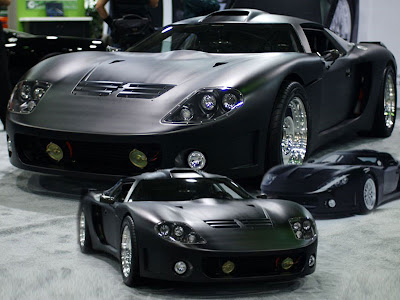
Capstone Supercar CMT-380

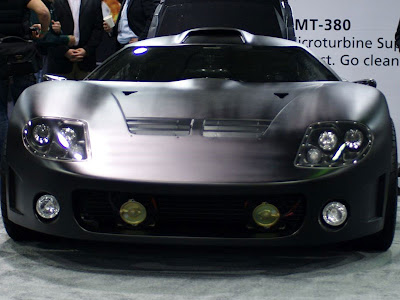
The Capstone CMT-380 was the surprise basement find of the LA Auto Show.The Capstone CMT-380 is essentially a prototype show car designed to highlight the technology and products available from Capstone Turbine Corporation. The concept for the high performance hybrid electric microturbine vehicle was developed by Electronic Arts (EA) Chief Creative Director Richard Hilleman.
Capstone Supercar CMT-380

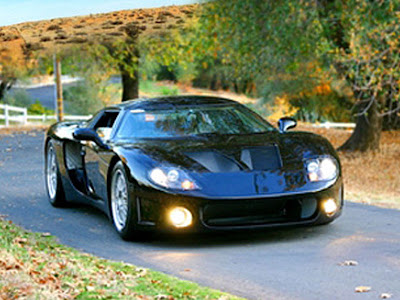
After working on the car for four years, inventor Richard Hilleman was the man of the hour as he fielded questions about his unusual microturbine-lithium-ion hybrid powertrain fitted to a GTM Supercar kit body. It may still be in the test phase, but Capstone claims that the car can reach a top speed of 150mph, and is able to sprint from zero to 60mph in just 3.9 seconds.
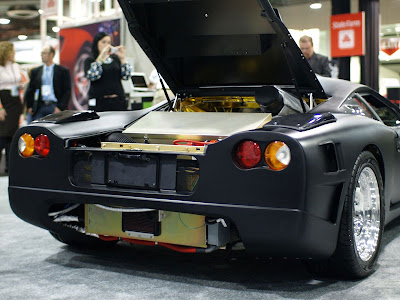
The CMT-380 features an unusual hybrid drivetrain which uses one of Capstone's new C30 (30-kilowatt) microturbine engines to extend the range of the primarily electric powered vehicle. The turbine can be run on either diesel or biodiesel.
Capstone Supercar CMT-380

The CMT-380 features lithium-polymer battery cells that can be charged at home or at a public recharging station. While driving, the CMT-380 can operate on 100 percent battery power in zero emissions mode for a range of up to 80 miles. When the batteries reach a predetermined state of discharge, the Capstone C30 microturbine quietly fires up and recharges the batteries on the fly to extend the driving range up to 500 miles. The diesel fueled C30 microturbine requires less maintenance than traditional combustion engines and produces ultra-low exhaust emissions. Hilleman has owned an electric vehicle – a converted Porsche 550 Spyder – for at 15 years and has constantly upgraded it. The EV used to have just 30 hp with lead acids but now uses lithium ferrous batteries and has 200 hp. The 100-mile range hasn't changed, though, and so he knew it was time to build a hybrid. He decided on Capstone's diesel microturbines as the range extender.

Capstone Supercar CMT-380

He knew he could rely on them – they've been used in buses for years – but there was still the challenge of fitting the unit into a car like this. Hilleman built the CMT-380 just for himself, but Capstone is happy to show it off as a proof of concept vehicle. It would be too pricey to put into mass production (Hilleman estimated he put in about $375,000 hours of work), but it's not impossible that a high-end, expensive, limited production run could be made some day.
Capstone Supercar CMT-380

Right now, Hilleman is really happy with his creation. He especially loves the sound of the vehicle. Three feet to the side of the car, the microturbine puts out about 87 dB, but in the cabin, it's nearly silent. California law might require him to add a muffler, but it's already quiet enough without one. He's got a solution for that problem, should he need it.
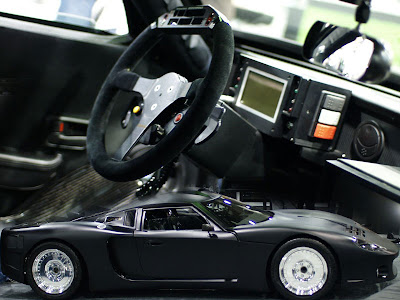
The chassis and bodywork of the Capstone CMT-380 are borrowed from the Factory Five GTM kit sports car, and modified to accept the hybrid drivetrain.
Capstone Supercar CMT-380

"Capstone's CMT-380 is just now finishing up the conceptual design and first article testing stage," said Darren Jamison, Capstone President and CEO. "We plan to finalize very soon a limited production plan, in part, based on interest received at the [2009] LA Auto Show. We anticipate customers will be a select group of individuals who appreciate its many innovative high-performance and high-technology driving characteristics, long driving range and ultra-low emissions," added Jamison.

Capstone Supercar CMT-380 the high performance hybrid electric microturbine vehicle Debut at LA Auto Show

Capstone Supercar CMT-380

The Capstone CMT-380 was the surprise basement find of the LA Auto Show.The Capstone CMT-380 is essentially a prototype show car designed to highlight the technology and products available from Capstone Turbine Corporation. The concept for the high performance hybrid electric microturbine vehicle was developed by Electronic Arts (EA) Chief Creative Director Richard Hilleman.
Capstone Supercar CMT-380

After working on the car for four years, inventor Richard Hilleman was the man of the hour as he fielded questions about his unusual microturbine-lithium-ion hybrid powertrain fitted to a GTM Supercar kit body. It may still be in the test phase, but Capstone claims that the car can reach a top speed of 150mph, and is able to sprint from zero to 60mph in just 3.9 seconds.
The CMT-380 features an unusual hybrid drivetrain which uses one of Capstone's new C30 (30-kilowatt) microturbine engines to extend the range of the primarily electric powered vehicle. The turbine can be run on either diesel or biodiesel.
Capstone Supercar CMT-380

The CMT-380 features lithium-polymer battery cells that can be charged at home or at a public recharging station. While driving, the CMT-380 can operate on 100 percent battery power in zero emissions mode for a range of up to 80 miles. When the batteries reach a predetermined state of discharge, the Capstone C30 microturbine quietly fires up and recharges the batteries on the fly to extend the driving range up to 500 miles. The diesel fueled C30 microturbine requires less maintenance than traditional combustion engines and produces ultra-low exhaust emissions. Hilleman has owned an electric vehicle – a converted Porsche 550 Spyder – for at 15 years and has constantly upgraded it. The EV used to have just 30 hp with lead acids but now uses lithium ferrous batteries and has 200 hp. The 100-mile range hasn't changed, though, and so he knew it was time to build a hybrid. He decided on Capstone's diesel microturbines as the range extender.
Capstone Supercar CMT-380

He knew he could rely on them – they've been used in buses for years – but there was still the challenge of fitting the unit into a car like this. Hilleman built the CMT-380 just for himself, but Capstone is happy to show it off as a proof of concept vehicle. It would be too pricey to put into mass production (Hilleman estimated he put in about $375,000 hours of work), but it's not impossible that a high-end, expensive, limited production run could be made some day.
Capstone Supercar CMT-380

Right now, Hilleman is really happy with his creation. He especially loves the sound of the vehicle. Three feet to the side of the car, the microturbine puts out about 87 dB, but in the cabin, it's nearly silent. California law might require him to add a muffler, but it's already quiet enough without one. He's got a solution for that problem, should he need it.
The chassis and bodywork of the Capstone CMT-380 are borrowed from the Factory Five GTM kit sports car, and modified to accept the hybrid drivetrain.
Capstone Supercar CMT-380

"Capstone's CMT-380 is just now finishing up the conceptual design and first article testing stage," said Darren Jamison, Capstone President and CEO. "We plan to finalize very soon a limited production plan, in part, based on interest received at the [2009] LA Auto Show. We anticipate customers will be a select group of individuals who appreciate its many innovative high-performance and high-technology driving characteristics, long driving range and ultra-low emissions," added Jamison.

Thursday, 7 January 2010

modified nissan gt r wagon


modified nissan gt r wagon

modified nissan gt r wagon has already received rave reviews from just about everyone but those looking for a more family friendly version have been left waiting for the long rumored modified nissan gt r wagon sedan to make its debut. Well it appears someone finally got tired of waiting and ended up creating what could be the world's first GT-R wagon.

Wearing a modified nissan gt r wagon front end, the Nissan Stagea wagon boasts an aggressive appearance that would make drivers of the BMW M5 Touring and Mercedes E63 AMG Wagon think twice about passing. Built by Japan's Kids Heart tuning company the GT-R Stagea features a reduced ride height, big matte black wheels with bright accents, and a GT-R inspired rear bumper with quad exhaust tips.

Mercedes-Benz BlitzenBenz Concept Car Production year theoretical 2025

Mercedes-Benz BlitzenBenz concept car

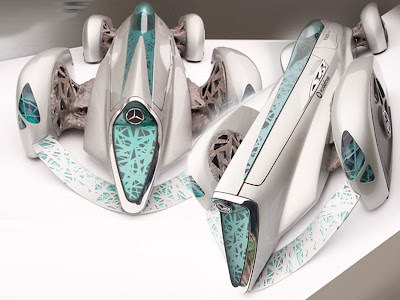
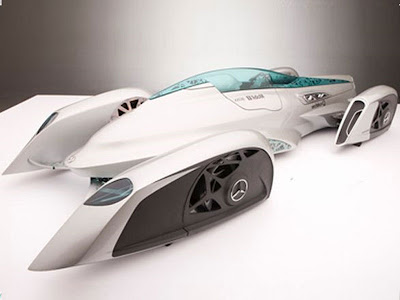
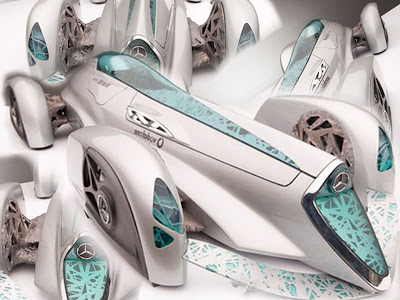
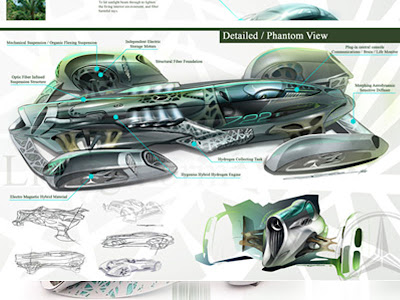
Mercedes-Benz BlitzenBenz concept car Production year theoretical 2025. Brilliant and outstanding is what every car lover will exclaim when will see this BlitzenBenz concept car. The Mercedes-Benz BlitzenBenz concept was created by George Yoo, a designer at Mercedes-Benz Research and Development in Carlsbad, California. The BlitzenBenz was developed during his final year at the Art Center College of Design in Pasadena.
Mercedes-Benz BlitzenBenz concept car

Created by George Yoo as a futuristic racing vehicle, BlitzenBenz concept is derived from two different sources. And let me tell you the roots of its design are in the past. The main inspiration behind the idea is from original Blitzen-Benz from 1909 that had a long tubular shape and rear cab positioning. On the other, Alex Erlandson work of creating sculptures from trees that were grown into certain shapes/patterns influenced Yoo considerably to contemplate what if automotive parts were to be grown and tamed to hold certain shapes.
Mercedes-Benz BlitzenBenz concept car

Obviously the technology is not quite there yet to create such a vehicle, but the current research into nanotechnology is paving the way for intelligent and adaptable components which can be grown instead of manufactured. It's an incredibly interesting prospect which would completely alter the way cars are built, maintained, upgraded and recycled.
Mercedes-Benz BlitzenBenz concept car

The exterior design is a base for the organic structure and the individual wheel pods are there to sense as to when the inside electric motors need to be cooled down. When the cooling will be required, these structures will open up in the same way as the plants do to receive the vital sunlight.
Mercedes-Benz BlitzenBenz concept car

To run this Mercedes-Benz BlitzenBenz, there is an advanced next-generation Hygenius hybrid hydrogen engine and four in-wheel electric motors. The inspiration for the blue lightening system came from bioluminescent capabilities of deep sea creatures. Also, a hydrogen storage tank is just below the cockpit and the fuel level is shown in a small window.
Mercedes-Benz BlitzenBenz concept car

Though, woefully, there is no technology to make this vehicle as such, but the progressing research into nanotechnology will surely open the way for components that can be grown than manufactured, changing the way cars will be built or maintained in future.

Mercedes-Benz BlitzenBenz Concept Car Production year theoretical 2025

Mercedes-Benz BlitzenBenz concept car

Mercedes-Benz BlitzenBenz concept car Production year theoretical 2025. Brilliant and outstanding is what every car lover will exclaim when will see this BlitzenBenz concept car. The Mercedes-Benz BlitzenBenz concept was created by George Yoo, a designer at Mercedes-Benz Research and Development in Carlsbad, California. The BlitzenBenz was developed during his final year at the Art Center College of Design in Pasadena.
Mercedes-Benz BlitzenBenz concept car

Created by George Yoo as a futuristic racing vehicle, BlitzenBenz concept is derived from two different sources. And let me tell you the roots of its design are in the past. The main inspiration behind the idea is from original Blitzen-Benz from 1909 that had a long tubular shape and rear cab positioning. On the other, Alex Erlandson work of creating sculptures from trees that were grown into certain shapes/patterns influenced Yoo considerably to contemplate what if automotive parts were to be grown and tamed to hold certain shapes.
Mercedes-Benz BlitzenBenz concept car

Obviously the technology is not quite there yet to create such a vehicle, but the current research into nanotechnology is paving the way for intelligent and adaptable components which can be grown instead of manufactured. It's an incredibly interesting prospect which would completely alter the way cars are built, maintained, upgraded and recycled.
Mercedes-Benz BlitzenBenz concept car

The exterior design is a base for the organic structure and the individual wheel pods are there to sense as to when the inside electric motors need to be cooled down. When the cooling will be required, these structures will open up in the same way as the plants do to receive the vital sunlight.
Mercedes-Benz BlitzenBenz concept car

To run this Mercedes-Benz BlitzenBenz, there is an advanced next-generation Hygenius hybrid hydrogen engine and four in-wheel electric motors. The inspiration for the blue lightening system came from bioluminescent capabilities of deep sea creatures. Also, a hydrogen storage tank is just below the cockpit and the fuel level is shown in a small window.
Mercedes-Benz BlitzenBenz concept car

Though, woefully, there is no technology to make this vehicle as such, but the progressing research into nanotechnology will surely open the way for components that can be grown than manufactured, changing the way cars will be built or maintained in future.

GTO BADGE IS BACK WITH FERRARI 599

FERRARI 599
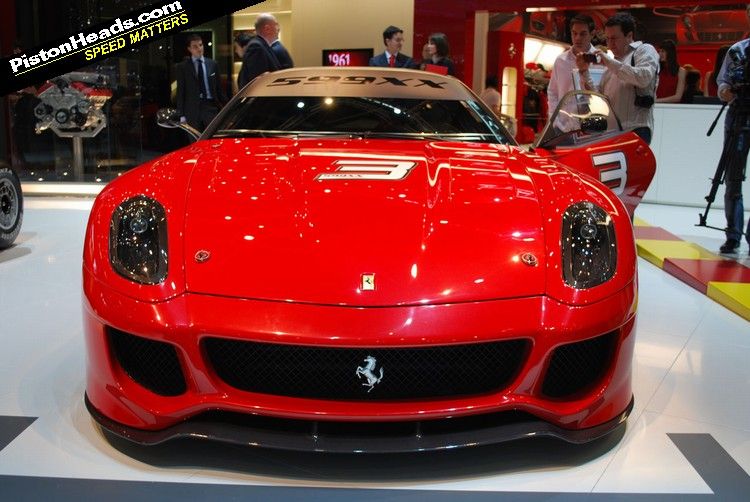
Ferrari is planning to 'Scuderia-ise' its 599 GTB hyper-GT with a hardcore version based on the track-only 599XX (pictured).

The new car could even bring back the fabled GTO moniker, a badge that hasn't been attached to a Ferrari since the mouthwatering, achingly desirable 1984 288 GTO.

According to the fine fellows at EVO magazine, the new 599 GTO will cost around £300k (a snip considering the 599XX costs a cool million quid), and could become one of the fastest Ferraris ever.

288 GTO was last Ferrari to bear the badge
The 599 GTO should manage 0-62mph in just 3.2secs (half a second up on the regular car) on its way to a 217mph top speed (the standard 599 HGTE is done at 205mph). The extra pace comes courtesy of a V12 that's had an extra 600rpm liberated to allow it to run up to 9000rpm and gives it a whopping 700bhp.

Apparently, this has only been made possible since the debut of the 458 Italia, when the 599 was recategorised by Ferrari as a 'sports car' rather than a 'GT'. To be honest, though, we don't really care how or why it's happened, we're just glad that it has.