
Tuesday, 22 December 2009

2010 The GeigerCars Cadillac CTS-V Brute Force Powered By A Supercharged 6.2 liters V8 Engine

2010 The GeigerCars Cadillac CTS-V Brute Force

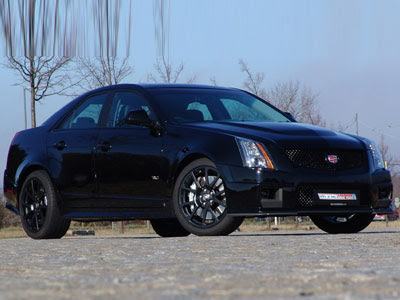
GeigerCars.de, a German tuner specialized in North American cars, has launched an upgrade program for the Cadillac CTS-V. Despite its German location, Geiger Cars shows a great passion for tuning American cars. Instead of getting even more power and torque out of neighbouring brands like the Audi RS 6, the BMW M5, or the Mercedes-Benz E 63, Geiger chose to cross the Atlantic and create a monster out of a beast.
2010 The GeigerCars Cadillac CTS-V Brute Force

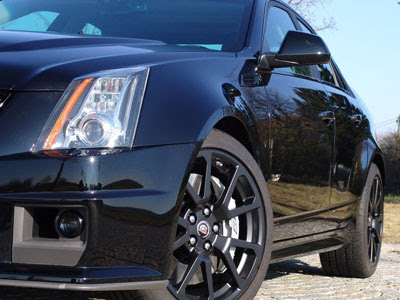
The performance saloon segment has for years been the exclusive domain of German manufacturers, for vehicles like the Audi RS6, the BMW M5 or the new Mercedes E63 AMG set the bar so high that most others don't even try to compete. So it's all the more surprising that the American Cadillac of all brands has suddenly hit back with the CTS-V, a lighting ride which has left a good many journalists pale-faced and shaken after test drives. 564 series HP and a massive maximum torque of 747 Nm are a clear challenge to Munich, Ingolstadt and Stuttgart.
2010 The GeigerCars Cadillac CTS-V Brute Force

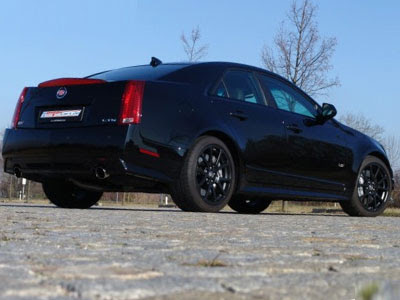
What is more, Cadillac is now marketing the CTS-V in Europe for 74,400.00 euros - which needless to say leaves its German competitors trailing on the price-performance front.
Tradition, as everyone knows, is an obligation to deliver. That is why GeigerCars.de is offering special performance tuning for the Cadillac CTS-V, timed to coincide with the American performance saloon's European launch.
2010 The GeigerCars Cadillac CTS-V Brute Force

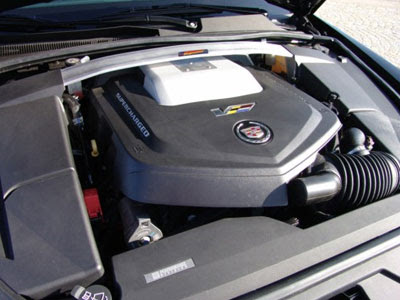
The four-door Cadillac with the tapered bonnet, The Cadillac CTS-V already comes packed to the hilt with a supercharged 6.2-litre LSA V8 based on the LS9 V8 from the Corvette ZR1. In its raw form it makes 415kW (564hp) at 5900rpm and 747Nm of torque. Not content, Geiger engineers upped the charge pressure releasing 455kW (619hp) and 850Nm of torque - a level few sports cars can match, and called it Brute Force. Drive is still thrusted upon the 6-speed gearbox and the rear wheels, although fifth and sixth gears are shortened. Top speed is rated at over 330km/h (205mph).
2010 The GeigerCars Cadillac CTS-V Brute Force

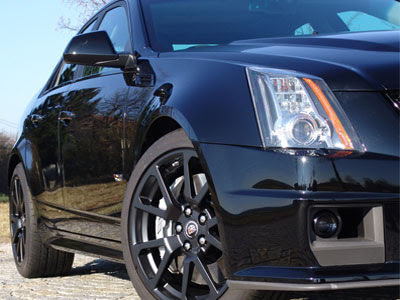
One thing is for sure: the Geiger Cadillac CTS-V shoots into action in all situations and keeps a joyful grin on its driver's face in every one of its manual gears. Not only that, but its optimised chassis means the CTS-V offers the perfect balance between long-distance comfort and an uncompromising hunger for curves and speed. In the face of such American sports perfection, we can only say "hats off"!". Geiger gives assurances that the car is a good compromise between a long-distance cruiser and a sharp, agile cornering machine. It can be had for €84,900, just €10,500 more than what Cadillac charges for the standard vehicle in Europe
2010 The GeigerCars Cadillac CTS-V Brute Force

Technical data, Geiger Cadillac CTS-V :
Engine: 6.2 liters V8 with compressor, increased charge pressure
Power: 619 HP at 5900 rpm
Max. torque: 850 Nm at 4000 rpm Bore x stroke: 103.2 x 92.0mm
Drive: rear-wheel drive
Gears: 6-gear transmission; 5th and 6th gear shortened
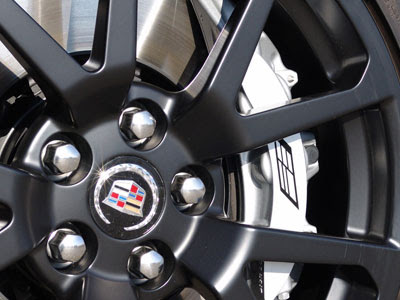
Brakes: ventilated disc brakes at front and rear
Top speed: 330km/h
Price: 84,900.00 euros

2010 The GeigerCars Cadillac CTS-V Brute Force Powered By A Supercharged 6.2 liters V8 Engine

2010 The GeigerCars Cadillac CTS-V Brute Force

GeigerCars.de, a German tuner specialized in North American cars, has launched an upgrade program for the Cadillac CTS-V. Despite its German location, Geiger Cars shows a great passion for tuning American cars. Instead of getting even more power and torque out of neighbouring brands like the Audi RS 6, the BMW M5, or the Mercedes-Benz E 63, Geiger chose to cross the Atlantic and create a monster out of a beast.
2010 The GeigerCars Cadillac CTS-V Brute Force

The performance saloon segment has for years been the exclusive domain of German manufacturers, for vehicles like the Audi RS6, the BMW M5 or the new Mercedes E63 AMG set the bar so high that most others don't even try to compete. So it's all the more surprising that the American Cadillac of all brands has suddenly hit back with the CTS-V, a lighting ride which has left a good many journalists pale-faced and shaken after test drives. 564 series HP and a massive maximum torque of 747 Nm are a clear challenge to Munich, Ingolstadt and Stuttgart.
2010 The GeigerCars Cadillac CTS-V Brute Force

What is more, Cadillac is now marketing the CTS-V in Europe for 74,400.00 euros - which needless to say leaves its German competitors trailing on the price-performance front.
Tradition, as everyone knows, is an obligation to deliver. That is why GeigerCars.de is offering special performance tuning for the Cadillac CTS-V, timed to coincide with the American performance saloon's European launch.
2010 The GeigerCars Cadillac CTS-V Brute Force

The four-door Cadillac with the tapered bonnet, The Cadillac CTS-V already comes packed to the hilt with a supercharged 6.2-litre LSA V8 based on the LS9 V8 from the Corvette ZR1. In its raw form it makes 415kW (564hp) at 5900rpm and 747Nm of torque. Not content, Geiger engineers upped the charge pressure releasing 455kW (619hp) and 850Nm of torque - a level few sports cars can match, and called it Brute Force. Drive is still thrusted upon the 6-speed gearbox and the rear wheels, although fifth and sixth gears are shortened. Top speed is rated at over 330km/h (205mph).
2010 The GeigerCars Cadillac CTS-V Brute Force

One thing is for sure: the Geiger Cadillac CTS-V shoots into action in all situations and keeps a joyful grin on its driver's face in every one of its manual gears. Not only that, but its optimised chassis means the CTS-V offers the perfect balance between long-distance comfort and an uncompromising hunger for curves and speed. In the face of such American sports perfection, we can only say "hats off"!". Geiger gives assurances that the car is a good compromise between a long-distance cruiser and a sharp, agile cornering machine. It can be had for €84,900, just €10,500 more than what Cadillac charges for the standard vehicle in Europe
2010 The GeigerCars Cadillac CTS-V Brute Force

Technical data, Geiger Cadillac CTS-V :
Engine: 6.2 liters V8 with compressor, increased charge pressure
Power: 619 HP at 5900 rpm
Max. torque: 850 Nm at 4000 rpm Bore x stroke: 103.2 x 92.0mm
Drive: rear-wheel drive
Gears: 6-gear transmission; 5th and 6th gear shortened
Brakes: ventilated disc brakes at front and rear
Top speed: 330km/h
Price: 84,900.00 euros

peugeot 207 cc and girl


peugeot 207 cc and girl

Design-wise, the peugeot cars 207 CC offers more elegant, sportier and sleeker lines than the 206 CC it replaces. The rakish windscreen does a wonderful job of highlighting the athleticism of the car. The rear, which I personally think has shades of the Mitsubishi Colt CZC, is neater and positively more attractive than its predecessor.

From whichever angle you look at it, the peugeot 207 CC now boasts a smarter and more confident look, more so with the top down. All it takes is just 25 seconds to convert from coupe to cabriolet, and vice versa. Without a one-touch function, all that you can do throughout these 25 seconds is to watch in awe as the roof folds majestically into the boot. Operating the roof is totally automatic, meaning that there is no catch to release or lock.

With the roof down, wind buffeting, or rather the lack of it, is never an issue. You can still hold a decent conversation at expressway speeds in the 207 CC.

The downside with many convertibles is that the absence of a solid roof often translates to rigidity problems. Without solid pillars to provide additional support to the overall frame, lesser convertibles usually fall prey to body flex. Peugeot engineers, however, have done a commendable job in strengthening the chassis, thus ensuring that the car remains largely flex-free even over bumpy roads and bends. The downside, however, is that 200 kilos have been added to the overall weight of the car.

Steering is both responsive and decently sharp, although it does get a bit vague above expressway speeds. Compared to the previous model, steering feedback has also improved, giving more information to the driver on the road surface conditions. On the inside, quality and design, have been given a boost with soft-feel facia. There’s no doubt that the 207 CC has become a classier car overall. Space-wise, there is abundance of it for those in front. It’s a different story altogether for the rear seats as even midgets would complain of cramped conditions.

Where luggage is concerned, golfers heading to the range or course should dispense with their full-size golf bags and full set of clubs. With the roof up, you get 449 litres of space. Driving topless, the cargo area dwindles to 187 litres. A practical solution is to dump the bags on the rear seat.

As much as I adore the 207 CC, the car is not without its bugbears, principally the four-speed Tiptronic gearbox. I had expected a consistent ‘hot-knife-through-butter’ smoothness in the gear changes but was greeted with the occasional jerkiness. Drive the car in the manual mode and you’ll have to contend with gear shifts that are anything but swift.

On the move, the 207 CC offers a generally pliant and comfortable ride. At the heart of the coupe cabriolet is a four-cylinder 1.6-litre engine with variable valve timing. Co-developed with BMW, the powerplant generates a maximum of 120 horses at 6,000 rpm and takes 12.6 seconds to sprint from zero to hundred. Torque is a surprising 240 Nm, offering abundant pulling power for swift overtaking. And when speed needs to be shed, the brakes bite exceptionally well.

The 207 CC, which boasts of 5-star Euro NCAP rating, abounds with safety features. These include Electronic Stability Program (ESP), Anti-lock Brakes (ABS), with Electronic Brake Distribution (EBD), and Emergency Brake Assist (EBA). On top of these, the four airbags and chrome-plated rollover bars complete with the safety net. J

peugeot cars red


History
The peugeot cars red was the result of a joint venture that Saab entered into with Fiat and Lancia. peugeot cars red, the project could not have produced three more different cars. Fiat's Croma and Lancia's Thema bombed, while the big Saab kept going strong, for well over a decade after it was originally launched.

It made its debut in the UK in 1985 as a five-door turbocharged 2.0-litre executive hatch, with a non-turbo 2.0-litre 136bhp model following a year later. Saloon variants were next, and the whole range got US-style high-level rear brake lights in 1988.

peugeot cars red In 1991, the range was revised, with uprated suspension and anti-lock brakes as standard. The five-door 9000 hatchback was now called the 9000 CS. The flagship Carlsson version was uprated to 220bhp with a 2.3-litre engine, while at the other end of the line-up, a popular luxury 2.0 CSE model was introduced in 1992.

Light-pressure turbo engines began to arrive in the CS and CD line-ups in 1992, first in 2.0-litre form (but later as part of the 2.3-litre engine line-up; don't confuse a 2.3-litre light pressure turbo – badged Eco or Eco E – with the full-blown 2.3-litre Turbo model).

peugeot cars red In 1993, the Carlsson was replaced by an Aero model with a slightly different look but much the same performance formula. After General Motors took control of the Trollhattan Company, the 24-valve V6 from the Vauxhall Omega was installed in top models in 1994.

peugeot cars red In 1997, the saloon CD models were replaced by the all-new 9-5. The five-door CS continued, however, but was itself deleted at the end of 1998, to be replaced effectively by the new 9-5 estate.

Monday, 21 December 2009

Peugeot 207 GTI 2008


Late in 2008, Peugeot launched the latest series of Peugeot 207 GTI. As reported by caranddriver.com automotive sites, this new variant is the next generation of the Peugeot car which has become a legend of the world, namely type 205 GTI ever produced in the 1980s, and the last type 206 GTI 180.

A number of improvements inherent in this car, for example, model and chassis design that looks more robust so that it can reduce the shocks to the car as it passed over the road surface is not flat. Vibration damping ability is also supported with Bridgestone Potenza tires 205/45R17W wheel size. Not to mention the rear of spoilernya able to improve the aerodynamics of this car to achieve maximum efficiency levels.

Kitchen machines equipped Peugeot 207 GTI technology DOHC turbocharged and intercooled, 16 valve with inline-4. Through this specification power 1598cc engine capable cars can reach 172 bhp with maximum torque of 192 lb ft from 1600 rpm acceleration.

Not only that, this car is also equipped with the latest generation of ESP technology system, in which the technology is able to "manipulate" the maximum speed up to level. ESP technology is also supported by the SSP function (Steering Stability Program). The concept of electric power steering control is able to overcome the car when not flat across the surface.

Driver comfort when entering the cabin was designed exclusive and sporty. Capacity of four passengers seat is designed so that drivers and passengers are made comfortable. In addition to a sporty model joknya, leather seat pad material / chairs are made with quality materials. In addition to the softness of the material, the springs are underneath also helps the comfort of the driver.

Sculpted shapes and ergonomic seat design, was made designer for the sports car concept, which is not just unsightly, but also functional.

For driver safety, this car is equipped with 6 airbags as standard fittings, plus 2 Isofix child safety on the rearnya mounting. With a maximum level of security protection-generation car 207 Euro NCAP award.

peugeot 207 gti sport


The peugeot 207 GTI sport versions came in either 1.6 or 1.9-litre configuration, and are considered to be among the most popular hot hatches of the era. Compared to modern cars they are difficult to handle but offer a very rewarding driving experience
when mastered

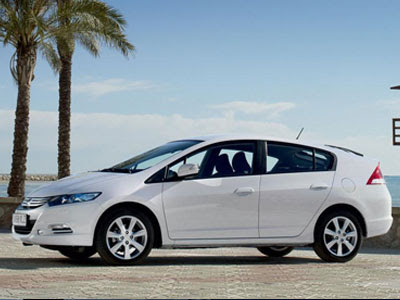
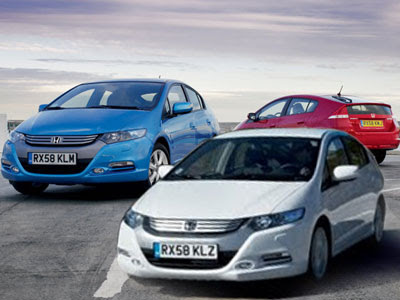
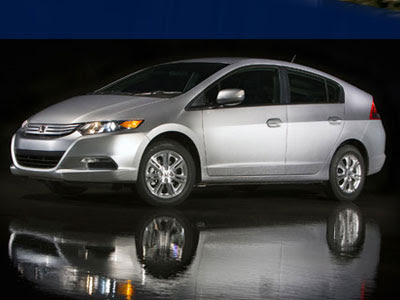
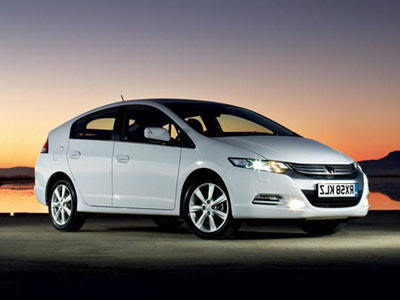
2010 Honda Insight EU Version Called 'Aero Athlete' Concept

2010 Honda Insight EU Version

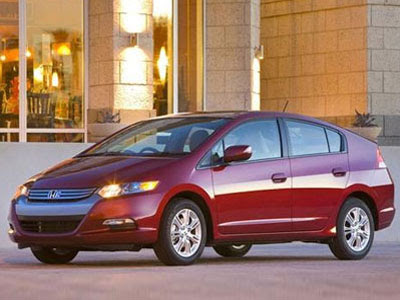
Although the Honda Insight design team started with a blank piece of paper - in that this was a brand new model with no history - they faced many challenges in creating the exterior appearance of the Honda Insight.
On the one hand, as a low emission hybrid car, it had to express environmental credentials - it had to look like a 'green' car - but on the other hand it had to appear dynamic and fun to drive; part of Honda's key design principles. Above all, in line with the positioning of Honda Insight, the design had to appeal to a broad range of people.
2010 Honda Insight EU Version

While the 'greenness' of the car may have challenged the sporty direction of the overall design, in some areas it actually helped the dynamic cause. Because the newly-developed IMA system is more compact, it meant the nose of the car could be shorter, creating a snubbed, more aggressive look to the front end.
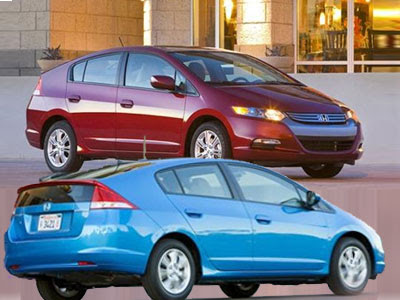
Another important factor that led (and to some extent restricted) the exterior design was the bodystyle itself. To appeal to as many people as possible, a 5-door layout was chosen, and this brought its own challenges, particularly when optimising the aerodynamics of the car, and creating enough headroom for passengers in the rear.
2010 Honda Insight EU Version

The Insight adopts slim, projector-style headlights in a 4-light cluster. The headlight's low beam has blue detailing, and the indicators are located in the lower bumper face.
Firstly, the line from the centre of the roof to the top of the boot lid is at the optimum angle for controlling the flow of air off the top of the car, with minimum turbulence. Also, you'll notice that the top half of the body tapers in towards the rear of the car, which also helps the air flow travel smoothly over the car. Stable air flow over this section helps the car pass through the air with minimal drag.
2010 Honda Insight EU Version

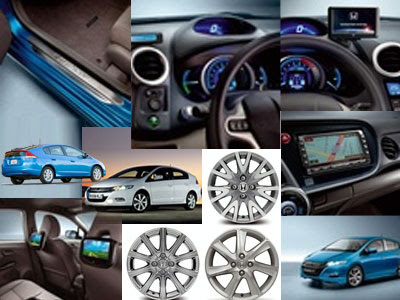
"The concept for the main shape of the car is called 'Aero Athlete'," says Mr Minowa. "It reflects a sporty, lean body with no fat, the tension of muscles and nothing unnecessary added." The Honda Insight is fitted with a seven-spoke alloy design, to enhance the sporty image of the car.
All Honda Insight grades are equipped with Honda's Vehicle Stability Assist (VSA) system, designed to assist the driver in maintaining control during cornering, acceleration and sudden manoeuvres by applying braking to the right or left hand wheels as necessary and managing the engine torque systems.
2010 Honda Insight EU Version

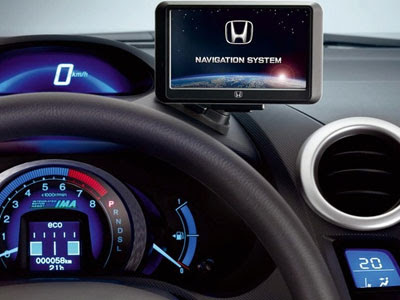
Honda's IMA hybrid system concept is now 10 years old - having made its debut in the original Insight back in 1999. IMA stands for Integrated Motor Assist, which consists of a low-friction 1.3 litre engine that serves as the primary power source, an ultra thin electric motor, a lightweight and compact battery with a continuously variable transmission.
This system has been used successfully in not only the Honda Insight, but also the Civic IMA, and its successor, the Civic Hybrid. Over the years the system has evolved and become smaller, more lightweight and less expensive to produce, and the latest version in the new Honda Insight is the most advanced IMA technology introduced by Honda to date. The fifth generation IMA system in the Insight is 24% more compact than the fourth generation system freeing up space for luggage.
2010 Honda Insight EU Version

The engine itself is new, but is based heavily on the 1.3-litre from the Civic Hybrid. This modified i-VTEC unit from the Civic Hybrid has been further enhanced with lessons learned from the Jazz incorporated to improve fuel economy. The low friction, pattern coated piston design has been combined with a new catalyst design to further optimise this already highly efficient power unit. These measures along with a further stabilised combustion process give a fuel economy improvement for the engine alone of 2% on what is already a highly-efficient unit.
2010 Honda Insight EU Version

When combined, the motor and engine produce lively performance ideal for urban environments, with good throttle response and acceleration times to rival conventional 1.6-litre petrol cars with automatic gearboxes. The Honda Insight reaches 100 km/h from a standing start in 12.6 seconds, and goes on to a top speed of 186 km/h.
2010 Honda Insight EU Version

Using a CVT transmission in a hybrid provides smooth and predictable gear transitions and helps keep the IMA system operating in its most efficient range. In the Insight, an evolution of the high-torque CVT unit from the Honda Civic Hybrid is used.
This version of CVT has a lower final drive gear ratio (4.200 from 3.937), which results in faster-acting initial acceleration performance.